Problems / Drainage restriction
Iron Ochre Problems in Michigan Basement Drain Tile
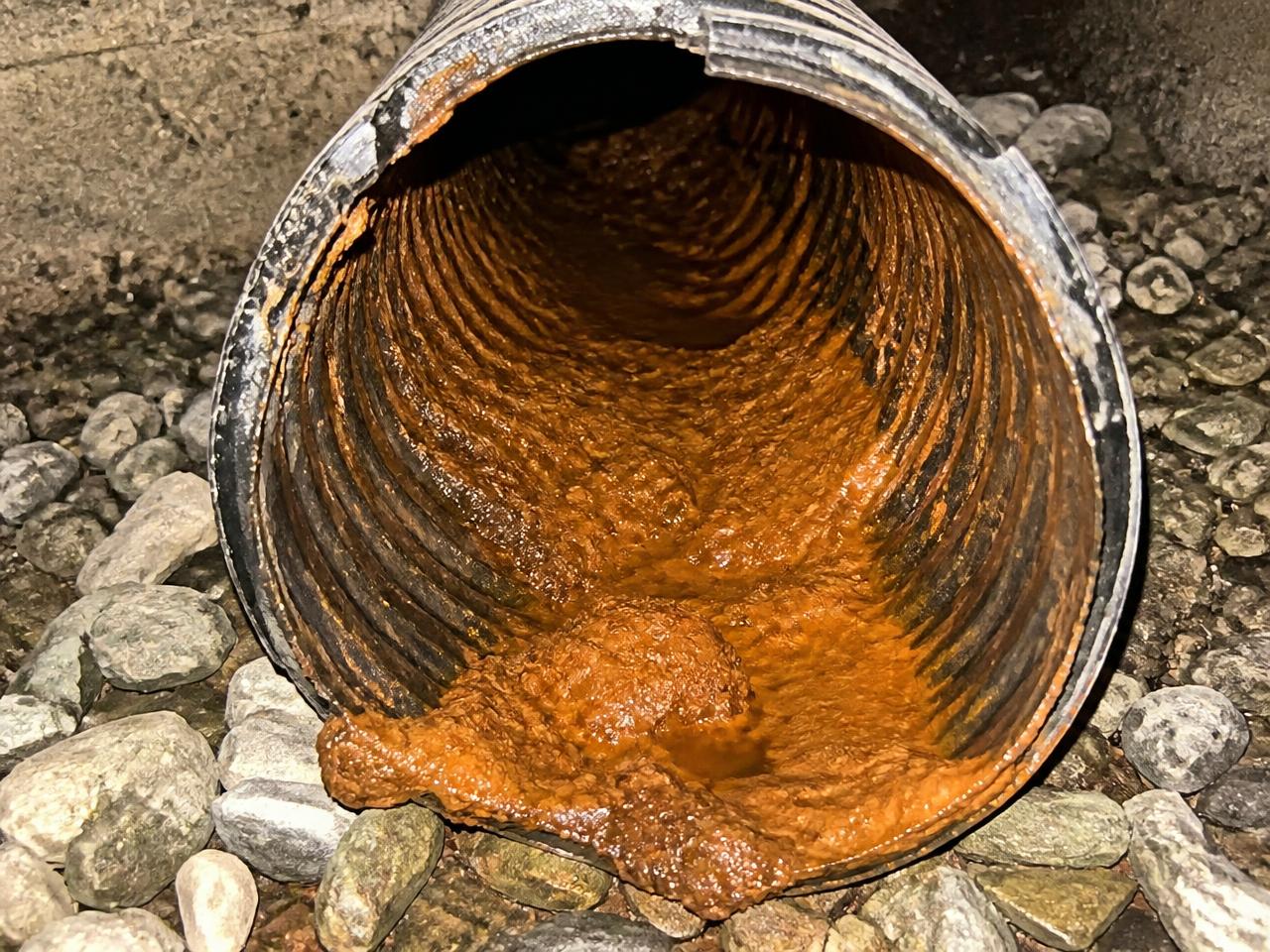
A rust-colored sludge inside a drain line or sump pit is one of the more distinctive drainage problems Michigan homeowners run into. It isn't rust from the pipe itself — it's a mineral and bacterial deposit that builds up over years and gradually chokes off the drainage system it's sitting in.
- What it looks like
- Orange-brown sludge or slime
- Where it forms
- Drain tile, sump pit, discharge line
- Underlying cause
- Iron-bearing groundwater + bacteria
- Main risk
- Reduced flow, clogged line, sump fouling
What is actually happening inside the pipe
Groundwater in many parts of Michigan carries dissolved iron. When that water reaches a drain tile line and meets oxygen, naturally occurring bacteria feed on the iron and produce a soft, slimy, orange-brown deposit along the way. It's the same process that stains toilet tanks and well equipment in iron-heavy water, just happening inside a pipe you can't see.
On its own that deposit isn't dangerous to the house. The problem is where it settles. Iron ochre collects at pipe joints, low spots, and perforations, gradually narrowing the channel the drain tile needs to move water. A line that once carried spring thaw runoff without issue can slow to a trickle a few seasons later, even though nothing about the pipe itself has broken.
How buildup progresses inside a drain line
Ochre doesn't clog a line overnight. It accumulates in stages, and each stage narrows the effective diameter of the pipe a little more.
| Stage | What's happening | Effect on drainage |
|---|---|---|
| Early film | Thin orange coating on pipe walls and perforations | Little to no noticeable change |
| Perforation clogging | Sludge plugs the small inlet holes along the pipe | Water can't enter the pipe as fast as it arrives |
| Sediment settling | Heavier deposits build up along the pipe invert | Flow slows, especially during high-volume events |
| Partial to full blockage | Sludge fills a section of pipe or the outlet to the pit | Water backs up and resurfaces at the wall-floor joint |
Sump pit and pump contamination
Sediment that breaks loose from the drain line typically ends up in the sump pit next. It coats the float switch, packs into the pump's intake screen, and can eventually seize a check valve. A pump that trips its breaker, runs but moves little water, or cycles erratically is worth inspecting for ochre before it's assumed to be a mechanical failure.
Living with iron ochre long-term
Because the underlying groundwater chemistry doesn't change, a one-time cleanout rarely solves the problem permanently. Basements with confirmed iron ochre generally need one of two approaches: periodic maintenance flushing on a set schedule, or a drainage system designed from the start with cleanout access and larger-diameter, smooth-bore pipe that resists buildup longer than standard perforated tile.
Describe the residue you're seeing and request a diagnostic conversation.
Check My Drain TileSigns to watch for
When existing drain tile needs attention
- Orange or rust-colored residue in the sump pit, even when the pit stays fairly dry.
- Slow or delayed drainage after rain compared to previous years.
- A sump pump that runs but seems to move less water than it used to.
- Recurring seepage at the wall-floor joint despite an existing drain tile system.
- Sediment or sludge visible when a cleanout port or the sump basin is opened.
Questions
Iron ochre questions
- Is iron ochre a sign my drain tile has failed completely?
- Not necessarily. Ochre buildup narrows the pipe and slows the water reaching the sump, but the line is usually still functioning to some degree. Left alone, restriction gets worse each wet season and eventually the pipe can't keep up during heavy rain or thaw.
- Can iron ochre be cleaned out of an existing line?
- In some cases the line can be flushed or jetted, but ochre deposits re-form quickly if the groundwater chemistry that produces them hasn't changed. Many Michigan basements with heavy ochre end up needing a drainage system designed for periodic cleanout rather than a one-time flush.
- Why does iron ochre show up in some Michigan basements and not others?
- It relates to the mineral and bacterial content of local groundwater, not to how the drain tile was installed. Homes on certain soil types and water tables see it consistently, while a house down the street may never develop it.
- Does iron ochre mean the sump pump is at risk too?
- Yes — the same sediment that clogs drain tile can travel into the sump pit and coat the float switch or intake screen, which is a common reason a pump appears to fail without any mechanical defect.
Keep reading
- Drain tile repair
Options when an existing line is clogged or no longer draining.
- Signs drain tile is failing
The broader checklist of symptoms beyond ochre alone.
- Sump pump systems
How sediment affects pump reliability and lifespan.
- Interior drain tile
How a new perimeter system is built to resist future buildup.
Estimate request
Check My Drain Tile
Tell us what the residue looks like and where you're seeing it. Two steps, no email required.
- 01Tell us what's happeningProblem, timing, and homeowner status.
- 02Enter your ZIP and phone numberSo local pricing can reach you.
- 03Request local pricingNo obligation, and no email required.
Get a Free Basement Waterproofing Estimate
Tell us what’s happening in your basement and request local pricing.
No obligation. Takes less than a minute.