Problems / Spring thaw
Basement Water After Snowmelt in Michigan
A winter's worth of snow doesn't disappear quietly. When it melts over a few warm days — often on top of ground that's still partly frozen — the water has to go somewhere, and for a lot of Michigan basements that somewhere is straight through the wall-floor joint.
- Peak season
- Late February through April
- Where it enters
- Wall-floor joint, cracks, floor drains
- Compounding factor
- Frozen or saturated soil beneath snowpack
- Common failure point
- Undersized or aging drain tile
The chain of events behind spring thaw flooding
Snowmelt seepage follows a predictable sequence. Snow accumulates over the winter and acts as a slow-release reservoir. When a warm stretch hits, that snowpack melts over days rather than hours, and the ground underneath is often still cold enough that infiltration is limited. Water runs across the surface and pools near the foundation instead of spreading out into the yard.
As melting continues, the soil around the foundation becomes fully saturated. Once the surrounding soil can't hold any more, the water table around the house rises, and hydrostatic pressure builds against the basement walls and under the slab. That pressure is what pushes water through the cove joint, through hairline cracks, and occasionally back up through floor drains.
Where drain tile and sump capacity come in
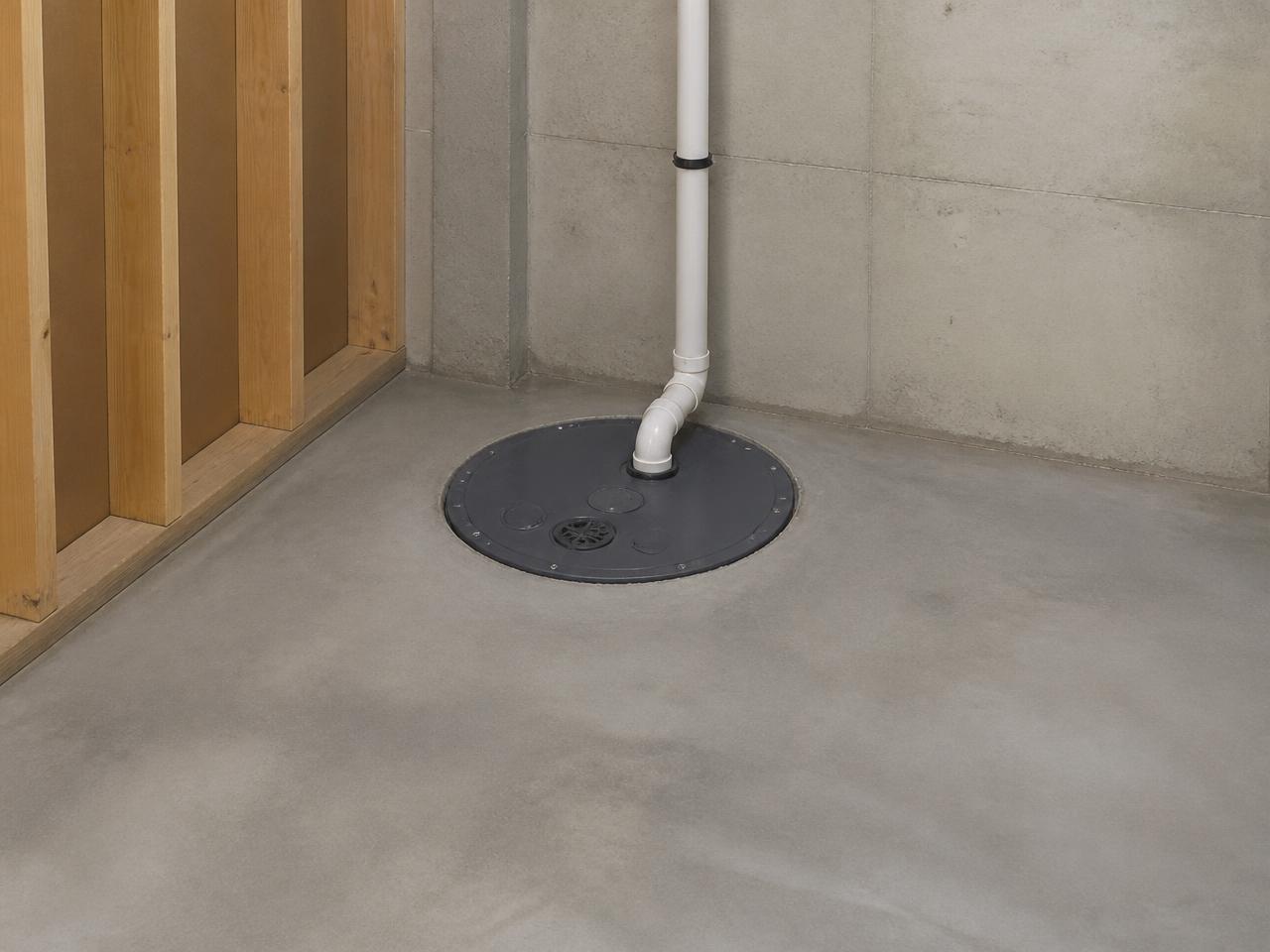
A properly functioning interior drain tile system is designed to intercept that rising groundwater at the footing and route it to a sump pit before it can reach the slab. During spring thaw, that system can see more volume in a single week than it handles the rest of the year combined. If the drain tile is clogged, undersized, or missing sections, or if the sump pump can't keep pace with peak inflow, water finds the path of least resistance — usually the wall-floor joint.
Why this repeats every year
Homes that see seepage after one thaw season tend to see it again, because the conditions that caused it — soil grading, drain tile condition, sump capacity — don't change on their own. Each year's freeze-thaw cycle can also widen existing foundation cracks slightly, giving water an easier path the following spring.
What actually stops it
Addressing snowmelt seepage usually means looking at the whole drainage path rather than a single component: confirming the drain tile can still move water at the volume spring thaw demands, sizing the sump pump for peak inflow rather than average conditions, and adding battery backup so a storm-related outage doesn't take the system offline during the exact week it's needed most.
Tell us when the water shows up and request local pricing.
Get Waterproofing OptionsDiagnostic notes
Reading the pattern of a thaw-season leak
- Seepage that starts a day or two after a warm stretch, not during the snow itself, points to soil saturation rather than direct precipitation.
- Water appearing along the entire perimeter rather than one wall suggests a groundwater or drain tile issue rather than a single crack.
- A sump pump that runs constantly for several days during thaw but the basement still leaks usually means inflow is exceeding what the drain tile or pump can move.
- Recurrence at the same time every year, even in average winters, points to a drainage system that's already near capacity.
Questions
Spring thaw seepage questions
- Why does my basement leak in March but not in December?
- December cold typically keeps precipitation locked up as snow with frozen ground underneath, so little water reaches the foundation. Once temperatures climb in late winter and early spring, that accumulated snow melts over ground that's often still partially frozen, sending large volumes of water toward the foundation faster than it can be absorbed.
- Is a bigger sump pump the fix for snowmelt flooding?
- Sometimes it helps, but pump capacity is only part of the picture. If water is entering faster than the drain tile can collect it, or if the drain tile itself is clogged or aging, an oversized pump won't fully solve seepage that's happening at the wall-floor joint or through a foundation crack.
- Should I worry about a power outage during thaw season?
- Yes. Spring thaw combined with a heavy rain event is one of the more common times for Michigan basements to flood, and it's also a period prone to storm-related power outages. A sump pump with no backup power is offline exactly when groundwater pressure is at its highest.
Keep reading
- Interior drain tile
The system designed to intercept groundwater before it reaches the slab.
- Sump pump systems
Sizing a pump for peak thaw-season inflow.
- Battery backup sump pumps
Coverage for outages during storm-driven thaw events.
- Water at the wall-floor joint
The most common entry point during spring thaw.
Estimate request
Get Waterproofing Options
Tell us what your basement does during thaw season and request local pricing. Two steps, no email required.
- 01Tell us what's happeningProblem, timing, and homeowner status.
- 02Enter your ZIP and phone numberSo local pricing can reach you.
- 03Request local pricingNo obligation, and no email required.
Get a Free Basement Waterproofing Estimate
Tell us what’s happening in your basement and request local pricing.
No obligation. Takes less than a minute.