Systems / Block foundations
Concrete Block Basement Waterproofing in Michigan
A concrete block basement doesn't behave like a poured wall when water shows up. Because the wall itself is built from hollow units, water can travel through the structure of the wall, not just around it, and that changes what actually solves the problem.
- Common in
- Homes built before the 1980s
- Weak points
- Mortar joints, hollow cores, block-footing seam
- Interior fix
- Wall drainage panel + perimeter drain tile
- Exterior fix
- Excavation, membrane, exterior drain board
How water gets into a block wall
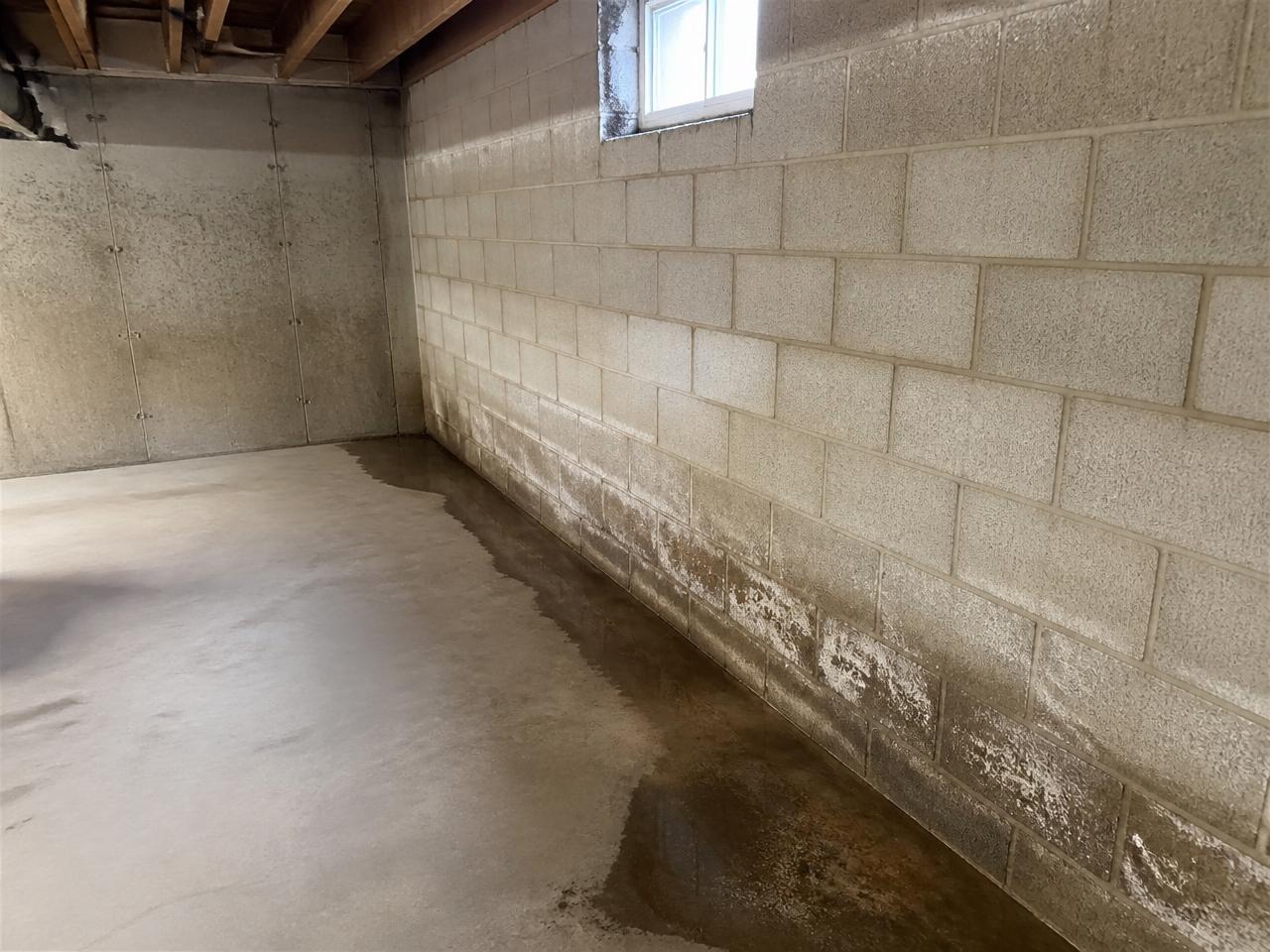
A concrete block wall is a stack of hollow units held together with mortar. Between the units, mortar joints age, shrink slightly, and develop hairline separations over years of freeze-thaw cycling. Water that reaches the outside of the wall can enter through those joints and drop straight down through the hollow cores inside the block itself, essentially using the wall as an internal channel.
That's a meaningfully different problem than a crack in a poured wall. A poured wall crack is a single, findable defect. A block wall holding water can be releasing it at the bottom of the wall, well below where it actually entered, which is why block basement leaks often look diffuse — damp along a long stretch of wall rather than one obvious source.
Where the water ends up
Water traveling down through block cavities typically exits at the base of the wall, at the same wall-floor joint where groundwater under hydrostatic pressure also surfaces. That means a block basement can have two contributing sources feeding the same visible leak: water pushing up from outside at the footing, and water dropping down through the block itself.
How interior drainage handles both sources
An interior system built for a block foundation typically pairs standard perimeter drain tile at the footing with a wall drainage component — weep holes drilled at the base of the block cores, or a dimpled drainage panel set against the wall — so that water coming down through the block cavities has somewhere to go besides the open basement floor. Both sources are directed into the same drain tile and sump system.
Exterior alternatives
Where the wall face itself is deteriorating, spalling, or bowing, exterior work becomes more relevant: excavating along the foundation, applying a waterproof membrane to the outside of the block, and installing exterior drain board so water is diverted before it ever reaches the block. This approach addresses the wall directly but requires excavation access around the perimeter.
Tell us about your block foundation and where the moisture shows up.
Request Waterproofing OptionsComparison
Interior versus exterior for block walls
| Approach | Best suited to | Disruption | Relative cost |
|---|---|---|---|
| Interior drainage + weep system | Wall-floor joint seepage, damp block cavities | Interior concrete work | Moderate |
| Exterior excavation + membrane | Deteriorating or bowing block wall face | Excavation and landscaping | High |
| Interior sealant only | Cosmetic dampness, no active water | Minimal | Low |
Questions
Block basement questions
- Why do block basements seem to leak more than poured concrete ones?
- Concrete block is built from hollow units stacked with mortar joints between them. Both the hollow cores and the mortar joints give water more paths into the wall than a single solid poured wall has, which is why block foundations tend to show water intrusion sooner and across a wider area.
- Can water be inside the block wall without any visible wet spot?
- Yes. Water can travel down through the hollow cores of a block wall and exit at the bottom, at the wall-floor joint, well away from where it first entered near the top of the wall. A dry-looking upper wall doesn't rule out water moving through the block cavities.
- Does painting or sealing the inside of the block solve the problem?
- Interior coatings can reduce surface dampness and staining, but they don't stop water that's already inside the block cavities or being driven by pressure from outside. Trapped water can also cause a coated surface to blister or fail over time if there's nowhere else for it to go.
Keep reading
- Interior drain tile
The perimeter system a block wall drains into.
- Exterior waterproofing
When the block wall face itself needs excavation and sealing.
- Water at the wall-floor joint
Where block cavity water and groundwater both surface.
- Michigan cost guide
How wall type affects overall project pricing.
Estimate request
Request Waterproofing Options
Tell us about your block walls and request local pricing. Two steps, no email required.
- 01Tell us what's happeningProblem, timing, and homeowner status.
- 02Enter your ZIP and phone numberSo local pricing can reach you.
- 03Request local pricingNo obligation, and no email required.
Get a Free Basement Waterproofing Estimate
Tell us what’s happening in your basement and request local pricing.
No obligation. Takes less than a minute.