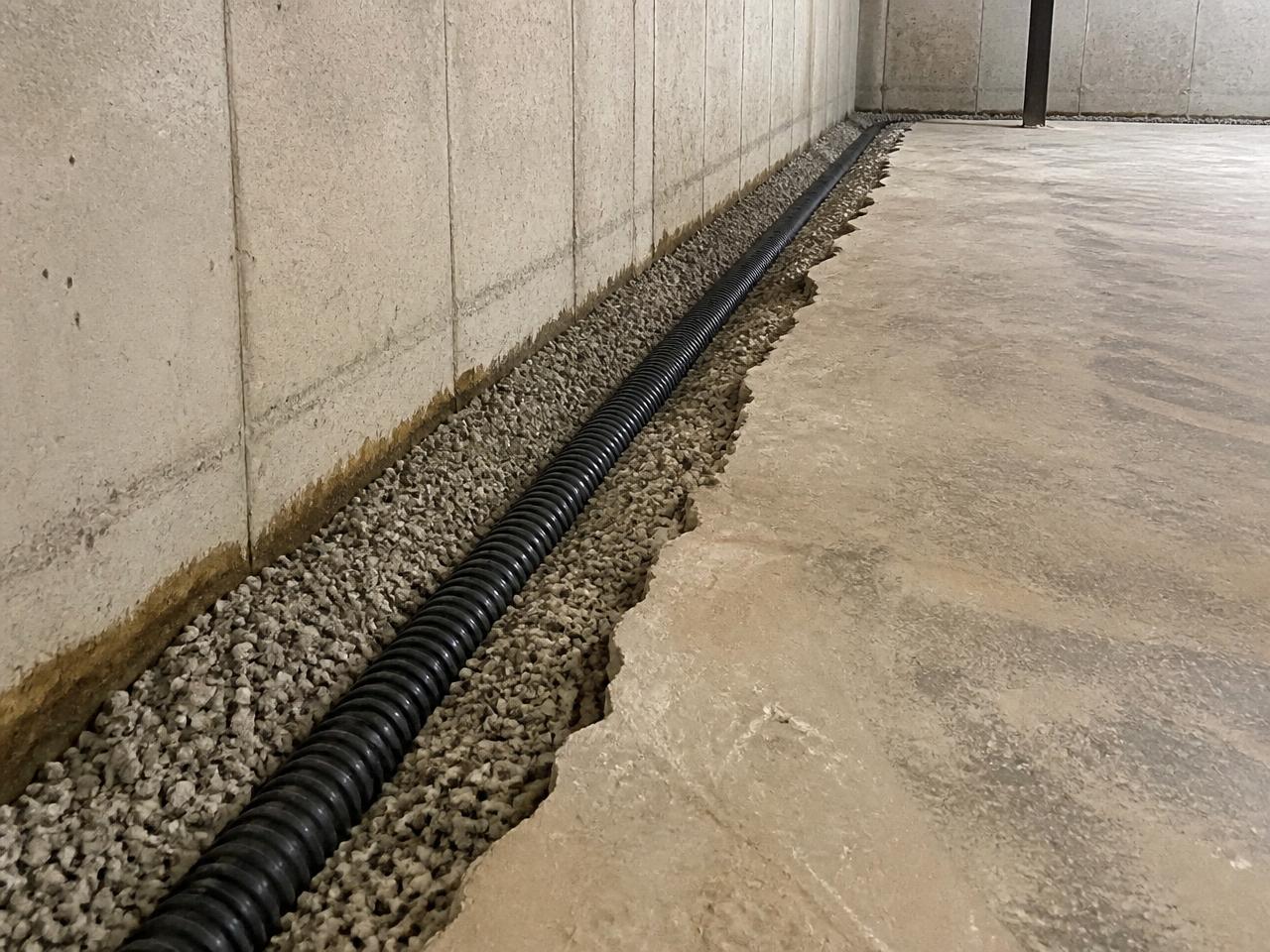
Interior Drain Tile
Retrofit standard
A perimeter channel at the footing that intercepts water under the slab and routes it to a sump pit.
Michigan basement diagnostics
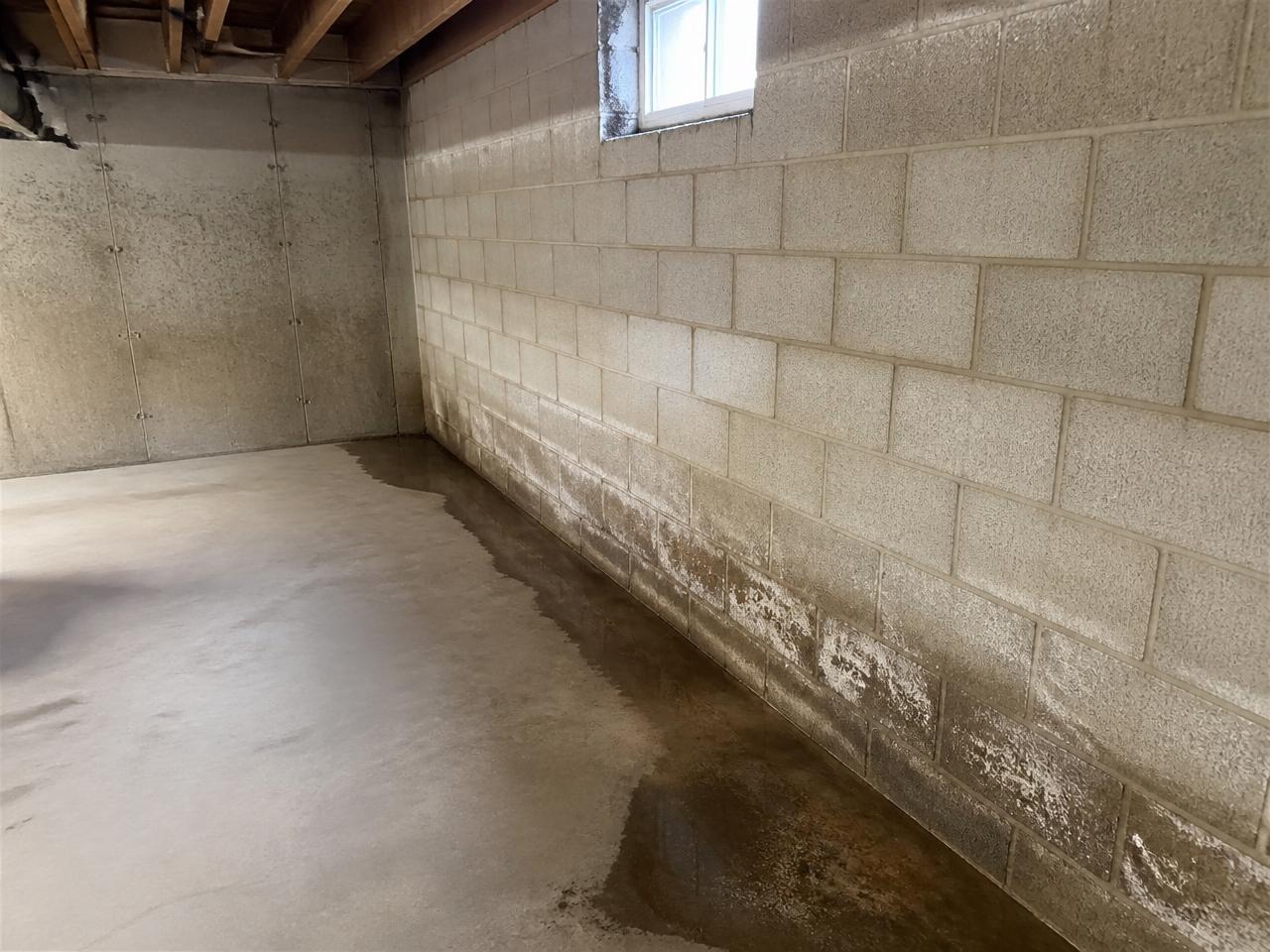
Most Michigan basement leaks are a drainage problem, not a wall problem. Snowmelt and heavy rain load the soil, groundwater rises under the slab, and water finds the wall-floor joint, an old crack, or a drain tile line that stopped moving water years ago. Start by identifying the source, then price the system that fixes it.
Conditions
Five variables explain most of what homeowners see on the floor. Each one points to a different repair.
Meltwater runs off frozen ground and pools at the foundation. Basements that stayed dry all winter start leaking in March.
Short, intense storms saturate the backfill zone faster than surface grading and downspouts can move water away.
A rising water table loads the slab and footing from below, forcing water through the weakest joints in the structure.
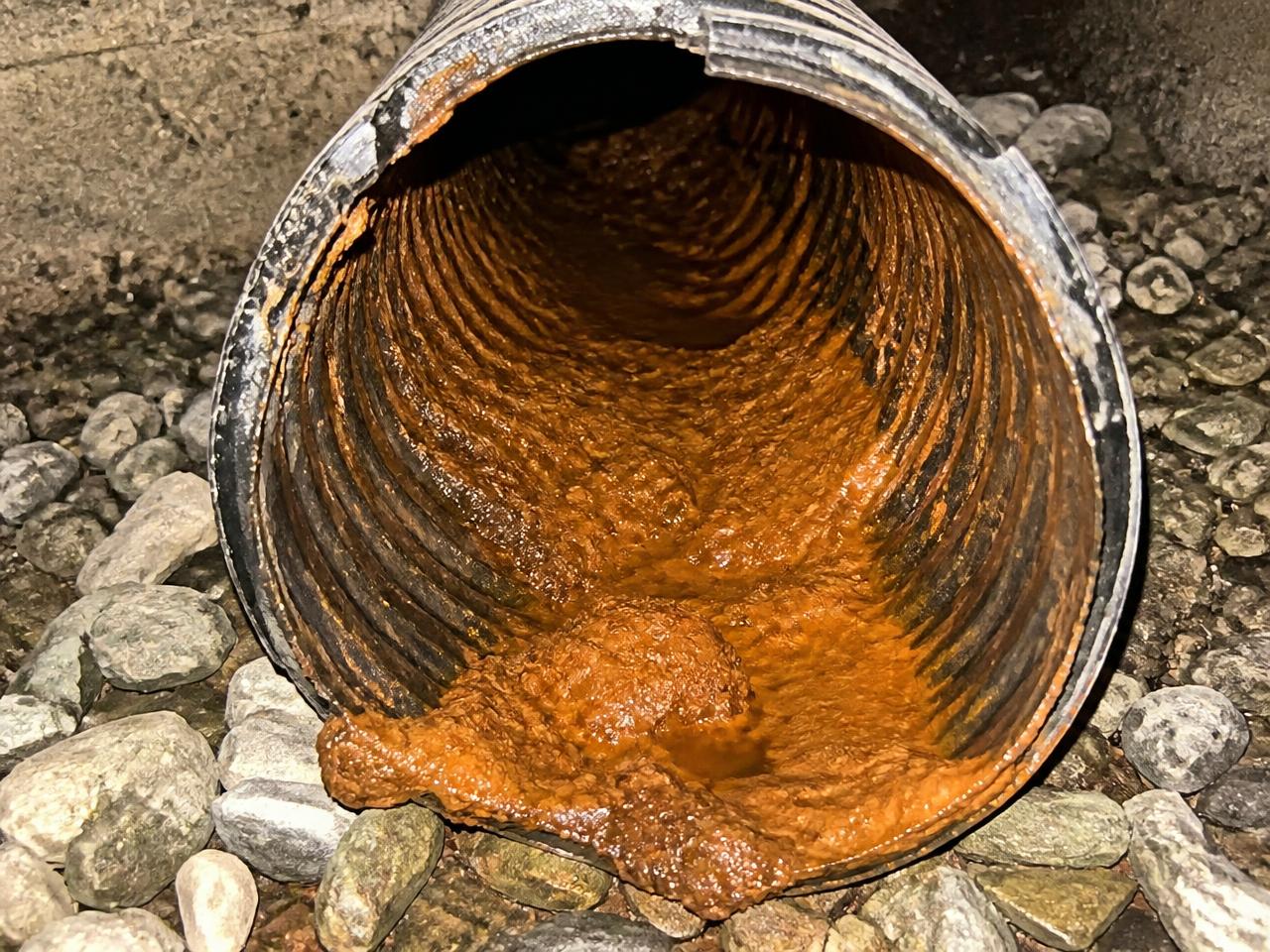
Perimeter drainage relieves that pressure — until sediment, crushed pipe, or iron ochre restricts the line.
Collected water still has to leave. Pump capacity, discharge routing, and backup power decide what happens during a storm.
Diagnostics
Water rarely enters through the middle of a wall. It enters at joints, penetrations, and cracks — and where it appears tells you which system is failing.
Start here
Pick the closest match. Each option opens the page written for that specific problem.
Systems
Different water paths call for different work. These are the six approaches used most often on Michigan homes.
Retrofit standard
A perimeter channel at the footing that intercepts water under the slab and routes it to a sump pit.
Recurring water
Diagnosis and correction of clogged, crushed, or disconnected drainage that no longer reaches the pit.
Water removal
Pit, pump, check valve, and discharge line sized to the volume the drainage system actually delivers.
Storm protection
Secondary pumping that keeps working when a storm takes the power out with the basement already filling.
Excavation
Excavation, wall membrane, drainage board, and footing drain that stop water before it reaches the wall.
Targeted leak
Polyurethane or epoxy injection that seals an actively leaking crack in a poured concrete wall.
Michigan-specific
Parts of Michigan sit on iron-rich groundwater. When that water reaches oxygen inside a drainage system, iron bacteria produce a rust-colored gel that coats gravel, fills perforations, and eventually plugs the line. The system was not installed wrong — it is being clogged from the inside, and it needs a cleanable design rather than another identical pipe.
Read the Michigan iron ochre guideBudget
Broad educational ranges. Real numbers depend on linear footage, foundation type, access, and how much water is involved.
| Scope of work | Typical Michigan range |
|---|---|
| Foundation crack injection | $300 – $1,200 per crack |
| Sump pump or backup system | $1,200 – $3,500 |
| Full perimeter interior drainage | $5,000 – $10,000+ |
| Exterior waterproofing | $15,000 – $30,000+ |
Coverage
Requests are matched with independent local service providers by ZIP code.
Estimate request
Two steps, no email required. Describe what your basement is doing and request pricing from a local Michigan service option.
Tell us what’s happening in your basement and request local pricing.
No obligation. Takes less than a minute.
Process
Choose the problem you see: snowmelt seepage, rain, a leaking crack, drainage, or a pump issue.
Your ZIP code sets the service area. Your phone number is how local pricing reaches you.
Your request is matched with an appropriate local service option for a no-obligation estimate.
FAQ
Short answers to the questions homeowners ask before requesting pricing.